
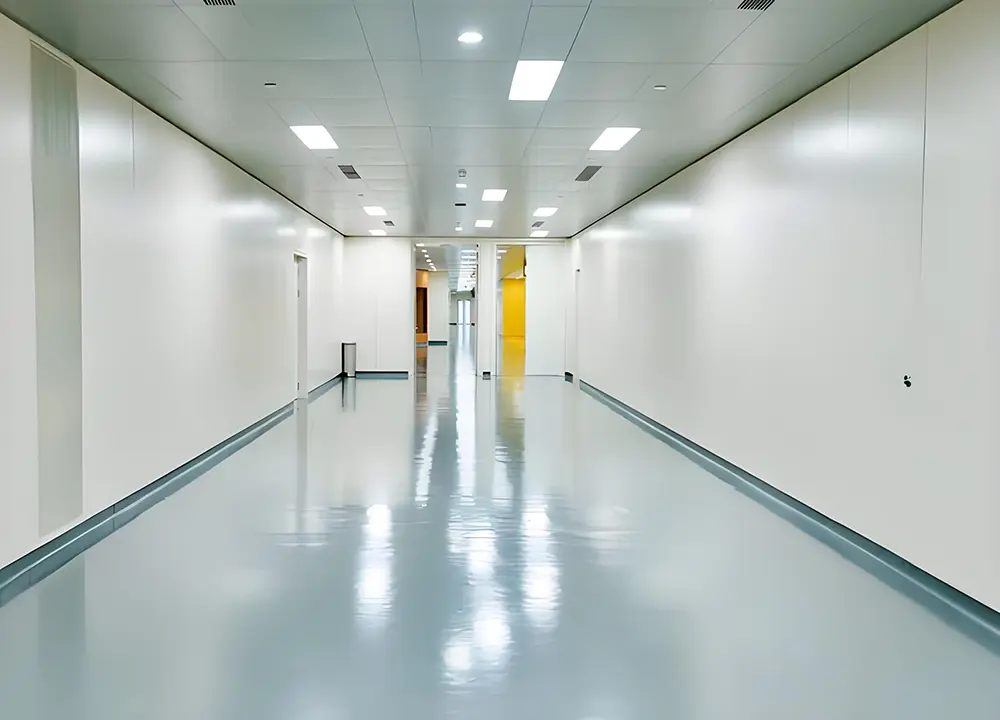
Waterproof vinyl flooring is a crucial function in the commercial sector. Achieving waterproofing requires more than just the PVC vinyl material itself. it also depends on the manufacturing process, installation standards, and other factors, distinguishing it from residential vinyl flooring. Commercial-grade flooring offers superior waterproofing and abrasion resistance for high-traffic, frequent foot traffic. Residential and commercial applications have different grades and standards.
1. Waterproofing Process
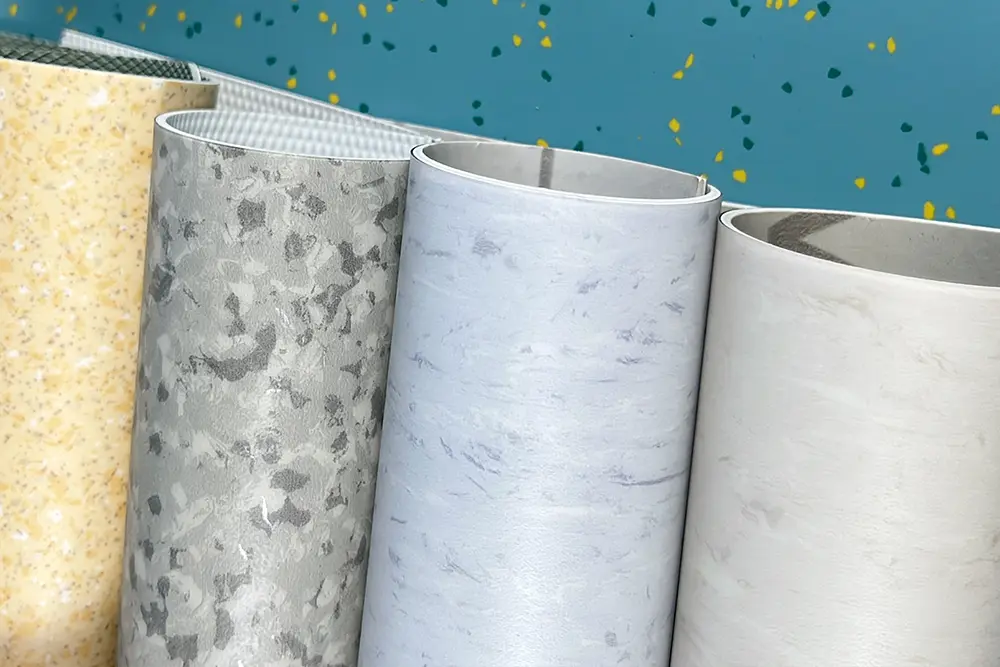
Commercial-grade waterproof vinyl flooring uses high-purity polyvinyl chloride (PVC) resin as its core material, manufactured through a multi-layer composite or homogeneous through-core process. It is available in sheets and rolls.
100% Closed-Cell Polymerized PVC Substrate Process: High-purity suspension PVC resin is polymerized under high temperature and pressure to form a dense substrate structure without interconnected pores. Even after 72 hours of full immersion, it will not exhibit swelling, blistering, delamination, or mold growth.
Classified by Vinyl Sheet Flooring Structure: Homogeneous through-core substrate, consistent waterproofing performance throughout the entire thickness. Even if the surface is worn, the waterproofing performance of the substrate itself remains unaffected.
A fiberglass stabilizing layer is layered over the core waterproof substrate layer of the heterogeneous flooring. This not only improves dimensional stability but also forms a two-way moisture barrier, preventing surface water from seeping down and also isolating moisture from the subgrade from rising back up.
2. Waterproofing of the Wear Layer
Most vinyl commercial flooring materials are not inherently waterproof because the substrate is not waterproof, but because damage to the wear layer allows moisture to penetrate, reducing its resistance to chemical corrosion and making it less resistant to stains and chemicals. Therefore, the thickness of the wear layer should be considered when choosing a flooring, as it is an important indicator of its waterproofing performance.
For example, a UV-cured polyurethane (PU) waterproof and wear-resistant coating, formed through electron beam curing, creates a dense three-dimensional network structure that prevents water stains, oil, and chemicals from penetrating. Cleaning is simple, requiring only wiping with water, preventing stain penetration and mold growth.
It can withstand corrosion from chlorine-containing disinfectants, iodine, alcohol, food-grade acids and alkalis, and industrial cleaning agents, meeting the requirements of commercial sectors such as hospitals and educational institutions.
3. Seams and Installation
Even with the best waterproof properties, commercial vinyl flooring will still allow moisture to seep through if the seams are not properly treated, leading to delamination, bulging, and damage to the subfloor. Therefore, there are specific standards for weld lines and the depth of grooves in the seams. Hot welding should be performed by professional installers to ensure a complete installation.
Using a professional welding gun, PVC welding rods of the same material are melted at high temperatures and filled into the beveled joint between two floorboards. After cooling, they form a seamless, integrated structure with the flooring. The weld strength and waterproof performance are completely consistent with the flooring itself, achieving 100% zero leakage at the seams.
A matching waterproof edging system is used. For areas with many gaps and corners, such as walls, thresholds, and pipe roots, integrated waterproof baseboards are used, a common installation method, along with waterproof strips and sealant for edging. This ensures the true effectiveness of the waterproof vinyl flooring.
4. Waterproofing Requirements
Kitchen, Bathroom, Swimming Pool Area:
Base material water absorption rate ≤0.01%, able to withstand over 72 hours of full immersion without deformation or delamination;
Wear layer resistant to chemical corrosion, resistant to food acids and alkalis, oil stains, and strong acid and alkali cleaners;
Homogeneous vinyl, heat-welded, integrated waterproof skirting board installation is available.
Hospitals, Nursing Homes, Laboratory Centers:
Base material water absorption rate ≤0.02%, able to withstand 24 hours of immersion without abnormalities;
Zero leakage at seams, hydrophobic surface without water retention, no unsanitary corners;
Wear layer resistant to chemical corrosion, resistant to long-term erosion by iodine, alcohol, and chlorine-containing disinfectants without coating damage;
Waterproof coating with added long-lasting antibacterial agent, meeting hospital infection control standards;
Anti-slip rating R9-R10, preventing slips and falls after cleaning.
Homogeneous vinyl flooring is suitable for key spaces such as operating rooms, while heterogeneous flooring can be laid in corridors, lobbies, and general wards, balancing performance and cost.
5. Should you choose sheet or roll waterproof vinyl flooring?
Roll flooring has the advantage of very few seams throughout the installation. It’s typically 1.8 or 2.0 meters wide and 10-20 meters long. Fewer seams mean less potential for leakage, enhancing waterproofing. The disadvantage is that irregularly shaped spaces require cutting, increasing the number of seams, and the weld lines are longer, making welding more difficult than with sheets.
Sheet flooring offers high control over single-seam waterproofing. A single seam is only 0.6 meters long, allowing for precise alignment and even beveling during installation. Hot-melt welding ensures uniform fusion throughout, with section-by-section inspection. The disadvantage is more seams, requiring higher skill levels from the installation team and stricter acceptance standards. It cannot be dry-laid or only glued; full-coverage installation is necessary.
6. Summary
Both homogeneous and heterogeneous structures of commercial vinyl flooring offer a certain degree of water resistance. The key difference lies in choosing the right type based on the intended use. Proper installation is also crucial to achieving optimal waterproofing. When purchasing, it is essential to carefully assess the thickness of the wear layer and the structural craftsmanship, obtain samples for testing, and select high-quality vinyl flooring.