Modular sports flooring and acrylic sports flooring (referring to Dongxing acrylic flooring mats, not coatings) are two main materials used for outdoor pickleball courts. 70% of the surface wear on the entire court is concentrated in the non-volley zone, so high wear resistance is required, similar to indoor courts. However, outdoor courts require even greater wear resistance and durability due to complex climate conditions, and must be able to withstand rain, snow, and temperature changes. As an exporter, we can meet both of our pickleball flooring types. However, comparing them over a basic 5-year lifespan allows for a more accurate comparison, helping buyers choose the most suitable option.
Interlocking Tiles for Pickleball Court
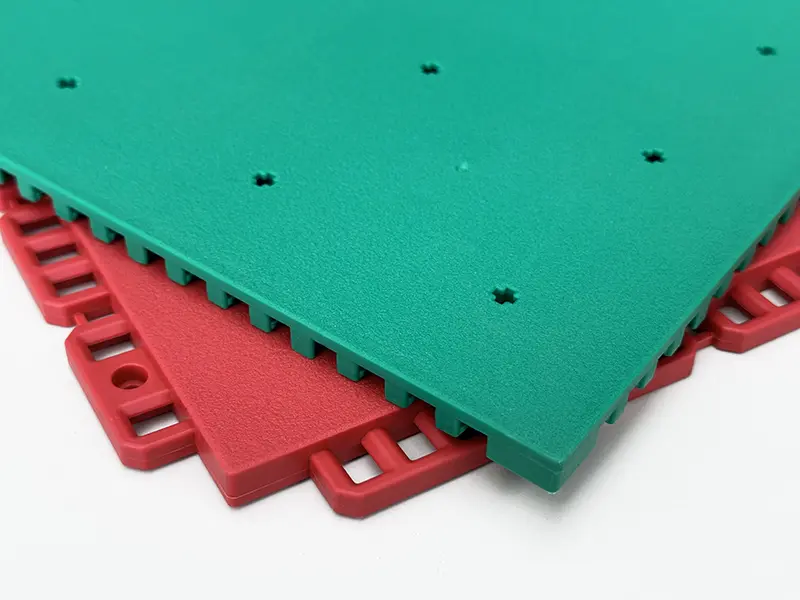
Interlocking snap-fit structure, strong vertical deformation cushioning, no adhesive required for installation, low maintenance and procurement costs, can be directly laid on any flat, hard base (concrete, asphalt, compacted gravel + geotextile base are all acceptable).
PVC + Acrylic Pickleball Flooring
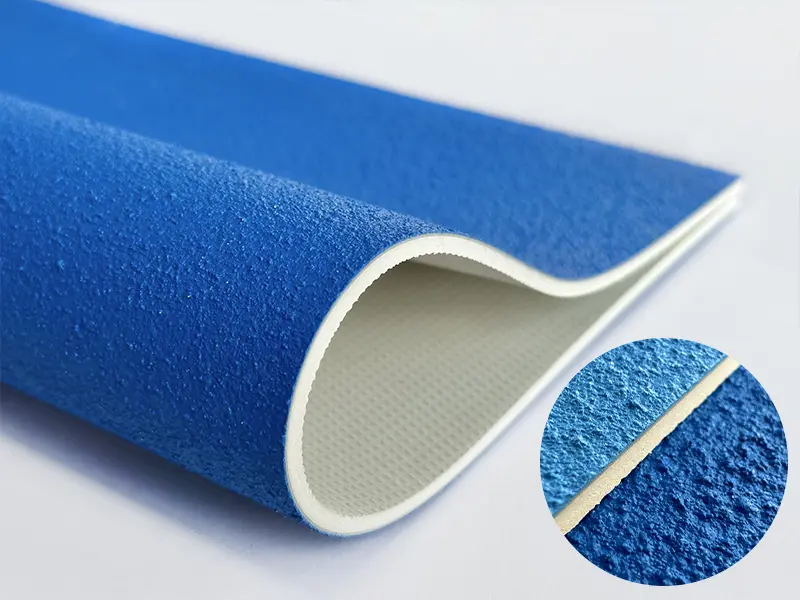
The bottom layer is a dense/foamed PVC base layer, with a fiberglass layer embedded in the middle to control dimensional deformation. The surface is covered with a 1.5-3mm thick wear-resistant acrylic coating. This was one of our previous new products. Because it uses two different materials to create one type of flooring, inferior products are prone to delamination and tearing of the acrylic and PVC base materials, while high-quality products do not have this problem.
1. Initial Construction Costs
Many pickleball courts are converted from old tennis courts, parking lots, badminton courts, etc. Interlocking flooring has less stringent requirements for base flatness (error within 5mm is sufficient), and base treatment costs can be reduced in conversion scenarios. PVC acrylic flooring has higher requirements for the base; it must be free of cracks, free of sand, and have a flatness error ≤2mm. Old courts require self-leveling or overall sanding, and base treatment costs are usually higher than for interlocking flooring. The specific differences depend on the cost of purchased materials and ground treatment.
Besides the base treatment, material and installation costs also differ. Material costs depend on the final quote from the pickleball court manufacturer, with acrylic coatings being slightly more expensive. Installing pickleball court tiles requires no professional installation or adhesive, making it cheaper than acrylic flooring.
2. Routine Maintenance
PP sport court tiles require almost no professional maintenance, no waxing, and no touch-ups. They are UV resistant and only need to be rinsed with water. Damage to the surface abrasion layer of PVC acrylic flooring requires replacement of the entire court. Therefore, the thickness of the abrasion layer should be a key consideration during initial purchase, as it often determines the lifespan, especially in outdoor environments. There is no significant cost difference in routine maintenance between the two; the difference lies in the replacement cost after damage, with acrylic flooring being more expensive.
3. Climate Costs
In high-humidity and rainy areas, the adhesive layer of glued PVC acrylic mats is prone to moisture damage and may require touch-ups. Thermal expansion and contraction can stretch PVC flooring, causing cracking and bulging, which is also related to installation specifications. Modular sports flooring has an expansion joint structure that adapts to temperature deformation, reducing the risk of cracking. However, everything is based on quality.
4. Pickleball Court Revenue
For commercial pickleball court flooring, downtime losses are the biggest hidden cost. Every day a single court is out of service directly results in lost profits. Downtime mainly occurs during partial repairs; damaged acrylic pickleball flooring requires complete replacement, leading to longer downtime periods.
5. Procurement Recommendations
Cost is not the only decision-making factor. The core participants in pickleball include middle-aged and elderly people over 55 and wheelchair players, who have a higher risk of knee and ankle injuries. Court performance directly affects user retention and safety. Dongxing Plastics’ pickleball flooring offers high customizability. The PVC foam layer, combined with a dense substrate, provides excellent cushioning, wear resistance, and ball rebound performance—a semi-dense, semi-foamed structure. This structural type can be applied to indoor PVC flooring and acrylic-coated flooring.
Choosing Interlocking Sport Court Floor:
Possible relocation or replanning of the court layout; Old court renovation with generally poor foundation conditions; Controlling long-term maintenance costs.
Choosing Acrylic Pickleball Mat:
High-standard, flat concrete base; High requirements for feel and ball trajectory feedback; Sufficient budget; Suitable for commercial and professional areas.
For most pickleball court construction projects: from backyards to commercial clubs, interlocking tiles offer lower costs. However, cost is not the only factor. The demand for acrylic PVC flooring is higher globally because users prioritize superior playing performance and feel.