
In South America, the popularity of football surpasses that of almost any other region, with Brazil’s familiarity and passion for the sport being virtually universally acknowledged. Of course, in many other parts of the world, indoor futsal is also a primary sport for many enthusiasts, with PVC and solid wood flooring being the main choices for indoor futsal surface materials. However, outdoors, especially in tropical and subtropical climates, a convenient, low-cost, and reliable flooring solution is needed in addition to grass.
1. Challenges Facing Outdoor Futsal Fields
- Extreme Weather: The surface needs to withstand UV radiation, heavy rain, and extreme temperature fluctuations (-40°C to 80°C) without fading, warping, cracking, or delaminating.
- All-Weather Suitability: Water can drain quickly, and the flooring provides stable anti-slip performance in both dry and wet conditions. Humidity is a significant factor, especially in tropical regions, and the same applies indoors.
- Stable Performance: The floor is designed to absorb shock during rapid changes of direction in futsal, reducing acute and chronic injuries for players.
- Construction Costs: Low initial installation and material costs, simple maintenance, and long service life.
- Environmental Sustainability: Non-toxic and safe for direct contact. Since players are likely to make tackles and slides during play, the materials should meet EU and other environmental standards and be recyclable.
2. Why Traditional Futsal Flooring Fails?
Acrylic courts have long been standard for outdoor courts. While offering stable ball bounce and excellent abrasion and weather resistance, acrylic is prone to cracking during freeze-thaw cycles, requiring a complete overhaul every 3-5 years.
Cast-in EPDM rubber flooring is commonly used in playgrounds, but its performance is not a perfect match for outdoor futsal courts. UV rays will degrade the rubber adhesive within 3-5 years, causing surface cracking and delamination. It is also highly absorbent, becoming very slippery when wet.
PVC Flooring: PVC rolls are ideal for indoor futsal, but not designed for outdoor use. Their performance in terms of rain and UV resistance is not optimal.
Artificial turf: While artificial turf is the most popular and common material for tennis and soccer, it is relatively expensive and requires significant maintenance. Its drainage performance after rain is also somewhat inadequate.
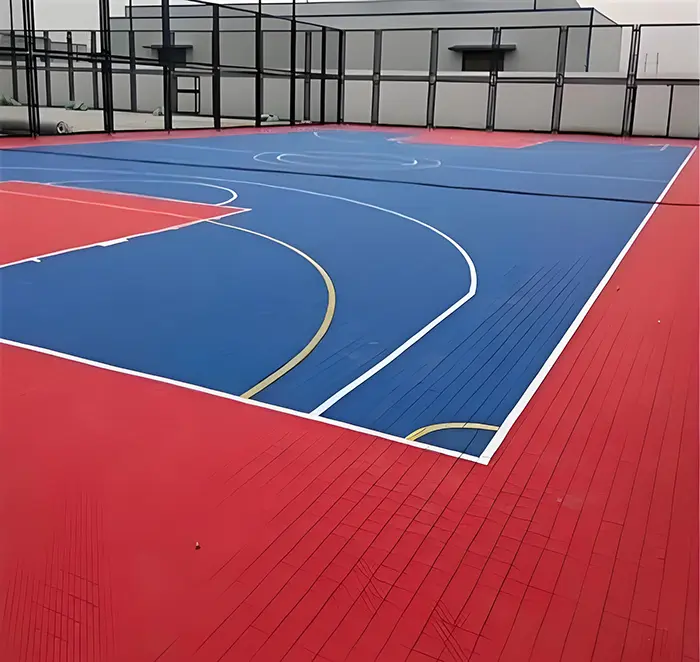
3. Interlocking Tiles: The Best Outdoor Futsal Flooring Solution
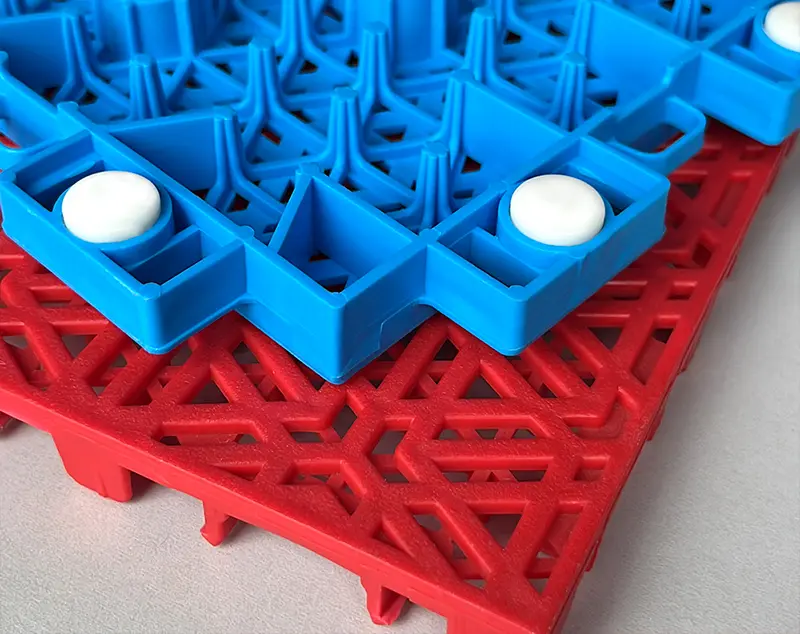
If you agree with the above-mentioned problems when building an outdoor futsal court, then modular flooring made of environmentally friendly PP material is the best choice. Its performance completely solves these problems, and more importantly, it is much cheaper than any other plastic or rubber material. It maintains structural integrity in a temperature range of -40°C to 80°C, and can withstand the extreme high and low temperatures of climates in South America, Northern Europe, and Central Asia without deformation or cracking.
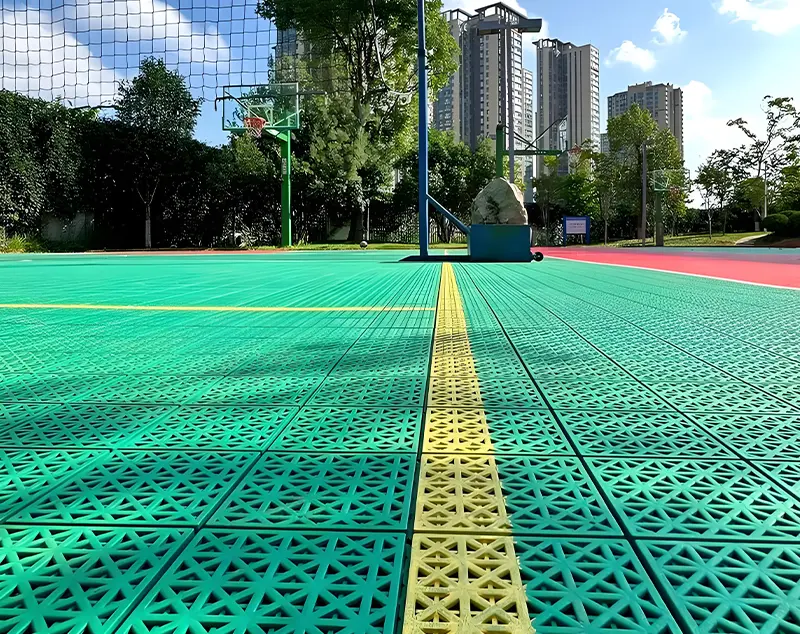
Its impact resistance is higher than standard PP, and its perforated design allows for an immediate and exciting futsal game after rain. It is also 100% recyclable, fully compliant with EU REACH regulations and global food contact safety standards, and offers better protection for children. Indeed, who doesn’t love playing a passionate and exciting game of soccer in their childhood?
To learn about the classification of this flooring, we recommend browsing: interlocking floor tiles
4. How many PP tiles do I need?
This depends on the area of your outdoor futsal soccer field. According to the fixed standards for official international A-level matches, the net dimensions of the playing area within the lines are: 40 meters long × 20 meters wide, with no fluctuation range, and the field line width is 8cm. Usually, the required floor area is larger than the field line area, generally using a length of 42 meters × a width of 21 meters. Considering our product dimensions, individual tile sizes vary, but using the most common 300×300mm, for a field with a total area of 882 square meters, approximately 9800 PP tiles are needed. You can calculate the exact number based on your actual futsal area.
5. Installation and Maintenance
Under normal use and maintenance, our interlocking sports flooring has a lifespan of 10 years or more, which depends on proper installation and good maintenance.
Foundation Preparation:
The field requires a flat and solid foundation with a 1-2% drainage slope. The levelness of the concrete or asphalt foundation must be controlled within 2 mm per 2 meters, with no obvious cracks or uneven areas. Existing tennis or basketball courts can be used directly without any modifications.
Installation:
Leave a 10-15 mm expansion joint around the perimeter of the court to accommodate thermal expansion and contraction. Use edge trim to secure the court edges and prevent tripping hazards.
Permanent lines can be drawn using court marking tape or UV-resistant court paint, without etching or damaging the tile surface. Custom logos and branding can be printed directly onto the tiles during the production process.
Routine Maintenance:
Clean the court with a high-pressure water gun every 3-6 months to remove dirt and debris. Regularly check for damaged areas and replace individual tiles promptly to prevent player injuries. Of course, such damage is extremely rare under normal use. The key is to choose a reliable supplier.