
Ballet’s pointe work, street dance’s explosive landings, tap dancing’s high-frequency tapping, modern dance’s continuous spins… Each dance style’s core movements have unique floor requirements: some rely on cushioning to protect joints, some on smoothness to ensure fluid movements, and some on hardness to achieve sound effects. Discussing dance floor material without considering the dance style is like choosing shoes without considering foot shape.
An unsuitable floor directly disrupts the balance of force between the body and the ground: an overly hard floor cannot absorb the impact of jumping, and the impact force is entirely reflected to the ankles, knees, and spine, leading to chronic injuries such as cartilage wear and patellar tendinitis over time; a floor with unbalanced friction is either too slippery, causing falls and sprains, or too rough, forcing the lower limbs to twist, causing ligament strains and meniscus injuries; a floor that is not wear-resistant will quickly crack, warp, and dent, becoming a direct safety hazard.
In this guide, we’ll compare the flooring requirements of the most popular dance styles and help you choose the best dance floor for your studio, school, theater, or home practice space.
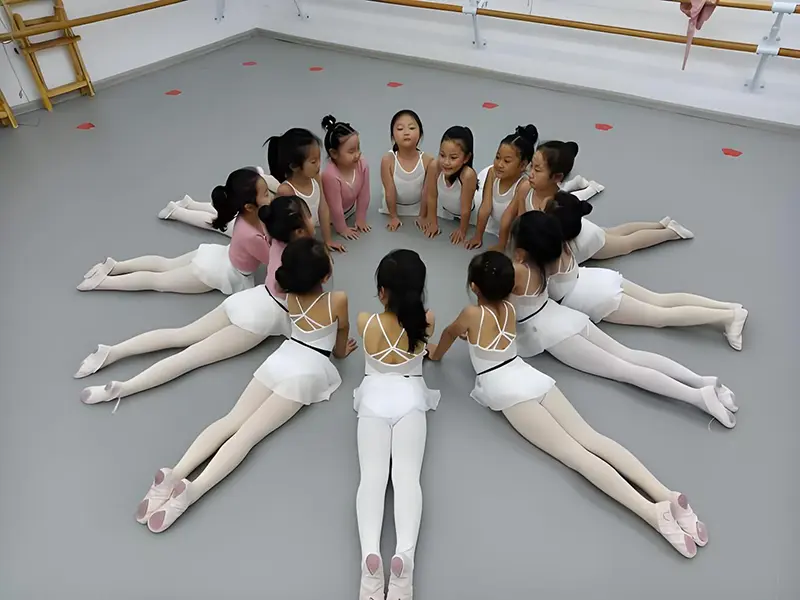
1. Why Does Dance Style Matter When Choosing a Dance Floor?
Impact Absorption
Jumping and landing in dance can subject lower limb joints to instantaneous impact forces several times the body weight. Shock absorption provides sufficient protection.
Professional elastic vinyl dance flooring use a foam cushioning structure to absorb impact force with appropriate deformation upon landing, then slowly release and rebound. This avoids being too hard, causing all the impact force to backfire on the joints, or too soft, creating a “force-relieving” feeling that affects the power of movement.
Slip Resistance
When the surface friction is insufficient or too slippery, dancers are prone to slipping when moving quickly, rotating, or changing direction, easily losing their balance and falling, resulting in abrasions, sprains, or even fractures. Conversely, when the surface friction is too high or too sluggish, dancers’ feet can feel instantly “stuck” when gliding or turning. For example, pointe work requires moderate grip for stability, ballroom dancing needs lower friction to support rotation, and street dance requires stronger grip to accommodate explosive movements. These all place different demands on slip resistance.
Surface Durability
Different dance styles and movement patterns cause drastically different wear patterns on the floor surface, resulting in significantly different durability requirements.
Tap Dance: Metal soles repeatedly strike the ground at high frequencies, resulting in impact-like wear.
Hip Hop: High-frequency friction and braking movements with rubber soles accelerate the wear of the surface coating, easily leading to scratches and peeling.
Ballroom: High-heeled dance shoes create concentrated high pressure on the floor; inferior floors are easily dented, leading to uneven surfaces over time.
Noise Reduction
The noise and vibration generated by dance movements not only affect the training experience but also disturb the surrounding space.
Dance floor systems with cushioning structures can absorb vibrations through deformation, significantly reducing solid-borne sound and weakening airborne footstep noise.
Maintenance
Commercial PVC Vinyl Flooring: Highly waterproof and stain-resistant; daily maintenance requires only wiping with a neutral detergent.
Wood Flooring: Solid wood flooring requires regular waxing and touch-up painting, and strict control of environmental humidity is necessary to prevent cracking and warping.
2. Best Dance Flooring Choices for Ballet
Ballet dance, with its core focus on pointe work, jumps, and continuous gliding steps, demands extremely high levels of flooring cushioning, flatness, and friction precision. It is the most demanding type of dance flooring in terms of professional requirements.
Recommended: Resilient Keel Flooring and Vinyl Dance Flooring.
Resilient keel flooring provides even and professional impact absorption, significantly reducing the impact on the ankles, knees, and spine when landing from jumps. Vinyl dance flooring has a smooth and even surface with medium friction, supporting stable pointe footing without being too slippery and causing ankle sprains, perfectly suited for core movements such as half-pointe and pointe walking.
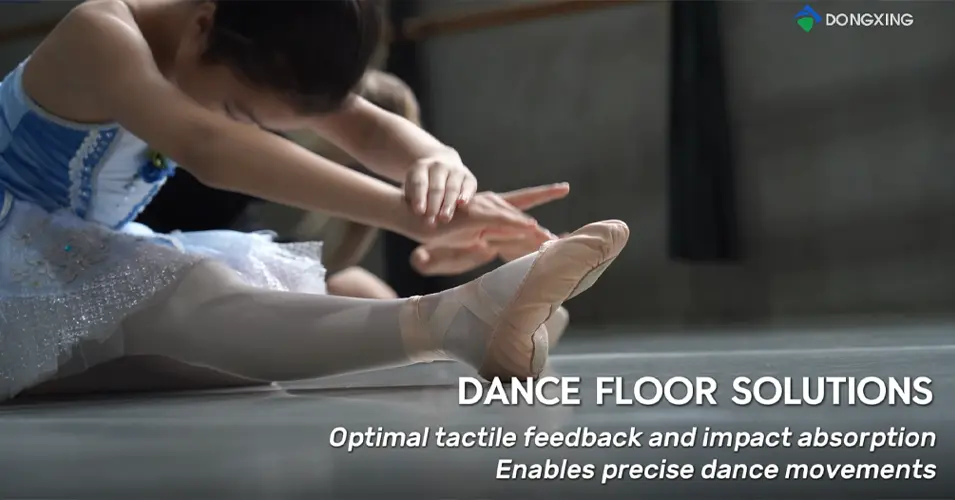
3. Best Dance Floor Choice for Contemporary Dance
Contemporary dance involves numerous barefoot movements, rolling, sliding, and floor work. The movements involve a large and varied contact area with the ground, placing specific demands on the floor’s feel, cushioning, and smoothness.
Professional vinyl dance flooring is recommended. If your budget allows, consider adding a resilient subfloor to effectively absorb the impact of kneeling jumps and falls, protecting your knees, wrists, and spine, and significantly reducing the risk of injury during floor work training.
4. Best Dance Floor Choice for Jazz Dance
Jazz dance is characterized by rapid spins, high-frequency footwork, and explosive jumps. The fast-paced movements and dense footwork require high-quality flooring with excellent grip, resilience, and durability.
PVC dance flooring features precisely controlled surface friction, ensuring non-slip movement during rapid steps and changes of direction, while allowing for smooth spins without any “foot-jamming” sensation, perfectly suited to the fast-paced nature of jazz dance.
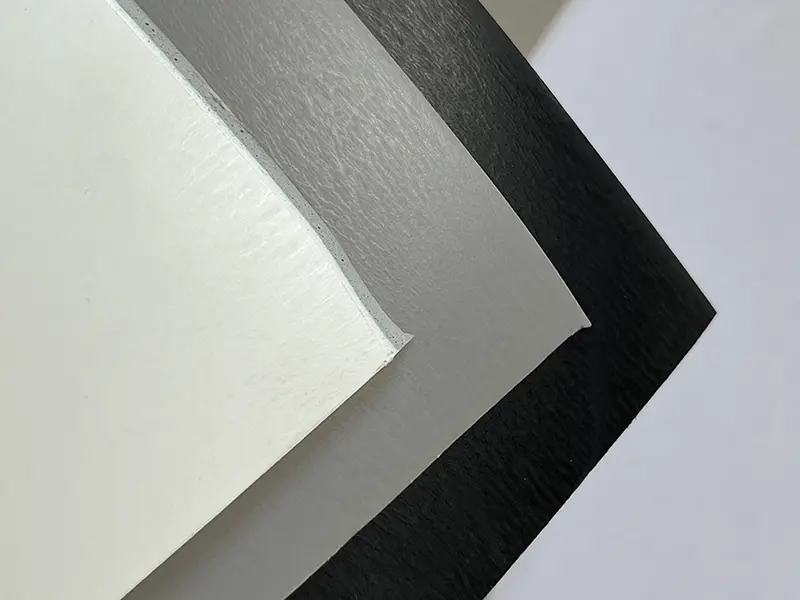
Jazz dance involves numerous explosive jumps and kicks. A resilient bottom layer effectively absorbs impact upon landing, protecting ankles and knees. Vinyl flooring allows for flexible customization of the foam layer thickness to meet different cushioning needs, such as 5.0mm or even 8.0mm.
5. Best Dance Flooring Choices for Street Dance
Street dance moves involve numerous floor techniques, explosive jumps, and sliding movements. These movements are highly impactful and cause significant wear and tear on the floor due to friction. Since street dance often takes place in impromptu performances and practice sessions, the durability and flexibility of the flooring are extremely important.
Heavy-duty vinyl flooring, portable dance flooring, and modular flooring are all options. With a thicker, harder wear-resistant layer, it can withstand the high-frequency friction of rubber shoe soles, braking movements, and repeated rubbing from floor movements, making it less prone to scratches and peeling. Its lifespan far exceeds that of ordinary flooring in high-frequency use scenarios.
6. Best Dance Floor Choice for Latin Dance
Latin dance encompasses several sub-dances such as Salsa, Bachata, Cha-cha, and Rumba. It features a fast rhythm and compact, agile footwork, including rapid steps, explosive turns, and smooth transitions, requiring precise floor friction and responsiveness.
Choose a solid wood dance floor or a professional 2.0mm/3.0mm vinyl dance floor.
Latin dance involves fast footwork and frequent weight transfers, requiring sufficient grip to prevent slipping during steps and power movements, while also needing a suitable level of smoothness to support turns and transitions. Solid wood flooring’s natural friction perfectly matches the rhythm of Latin dance movements, avoiding both excessive stiffness that could cause awkward turns and excessive slipperiness that could lead to loss of balance. High-density vinyl flooring provides dancers with clear feedback from the ground, and its foam cushioning layer isn’t too thick, allowing for precise control of footwork, perfectly complementing the rich rhythmic variations and delicate footwork of Latin dance.
Dongxing Plastic Dance Flooring System
Choosing a dance floor requires considering not only the dance style but also the needs of the usage scenario, budget, and frequency of use. For example, dance studios, children’s dance training institutions, fitness centers, and home dance spaces can all be categorized. In practice, each scenario may involve multiple dance styles, making the requirements for floor performance more complex. Therefore, factors such as elastic cushioning, slip resistance, and aesthetic design must be considered comprehensively. Fortunately, we offer dance flooring solutions with different thicknesses and structural properties. As a PVC flooring manufacturer, we have dedicated production lines for commercial dance applications in addition to sports applications, providing factory quotes and free samples for bulk purchases!