
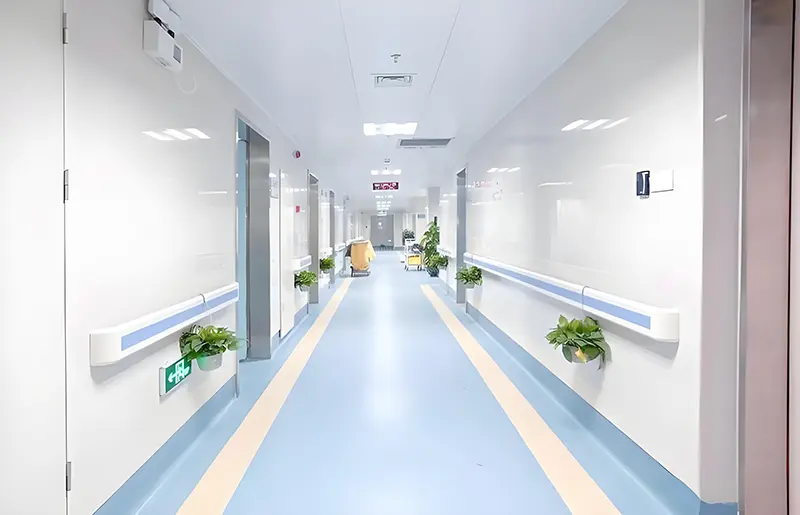
When designing or renovating nursing homes or elderly care facilities, flooring selection goes far beyond mere decoration. These spaces house elderly residents with limited mobility every day, endure frequent wheelchair and medical cart traffic, rigorous cleaning procedures, and stringent infection control measures. Inappropriate flooring materials can increase the risk of falls, foster harmful pathogens, and drive up long-term maintenance costs.
1. Why Flooring Choice Matters in Nursing Homes
1.1 Fall Risk
Falls are a leading cause of hospitalization and death due to injury among adults aged 65 and older. For residents of nursing homes, who often face balance problems, vision loss, and mobility impairments, slippery or uneven floors can lead to lifelong disabilities: hip fractures, prolonged hospital stays, and even permanent loss of independence.
Effective nursing home floors must provide reliable slip resistance even in wet conditions, while also offering a stable, supportive, and shock-absorbing walking surface to reduce gait fatigue.
1.2 Infection Control
Older adults have weakened immune systems and are more susceptible to infections. Therefore, flooring materials in this area should have similar antibacterial properties to medical-grade vinyl flooring used in hospitals.
The floor must be non-porous, easy to disinfect, and free of crevices that allow dirt, moisture, and bacteria to accumulate.
1.3 Durability
Nursing homes experience high-frequency use, with manual and electric wheelchairs, walkers, medical supply carts, meal delivery carts, and cleaning equipment constantly rolling across the floors.
This pressure easily leads to scratches, dents, and wear. Replacing flooring is costly, making highly durable flooring a long-term investment.
1.4 Comfort
Hard, inflexible floors can cause foot and joint fatigue, while rigid, echoing surfaces amplify footsteps and wheelchair wheel noise.
Low noise and a comfortable feel underfoot contribute to a calmer, more welcoming home environment.
2. Why Vinyl Sheet Flooring Is Commonly Used in Elderly Care Facilities
Tiles are hard and cold, and the grout in the gaps can easily harbor bacteria.
Solid wood flooring is susceptible to moisture damage and requires frequent refinishing.
Carpets can easily trap allergens and cannot be thoroughly disinfected.
Standard LVT flooring, while aesthetically pleasing, has dozens of seams in each room, posing a potential hygiene hazard.
In contrast, vinyl roll flooring allows for seamless welding.
2.1 Seamless Surface for Better Hygiene
Seamless, waterproof vinyl flooring is one of the most effective tools for infection control in healthcare facilities. The heat-fused seams create a completely smooth, seamless surface.
Fewer seams mean less buildup of dirt, moisture, and pathogens. Disinfectants can be wiped across the entire floor without sticking to edges or seeping into crevices, making daily cleaning more effective.
2.2 Water Resistance and Easy Maintenance
Vinyl flooring is inherently waterproof; as long as the seams are securely welded, liquids cannot penetrate the underlying layer, thus preventing mold growth and structural damage.
The wear-resistant protective layer effectively prevents stains and dust from penetrating. However, the key lies in the thickness and manufacturing process of this layer. Daily cleaning simply requires a neutral detergent and mop—no waxing, polishing, or vigorous scrubbing is needed.
2.3 Slip Resistance for Elderly Safety
High-quality roll vinyl textured surfaces have an anti-slip design, but an important yet often overlooked issue is that the anti-slip properties must be balanced with wheelchair maneuverability. Overly rough, high-friction surfaces can make wheelchairs and walkers difficult to move, increasing the burden on caregivers and affecting the elderly person’s independent mobility.
2.4 Durability Against Wheelchairs and Heavy Traffic
Commercial-grade vinyl composite flooring features a thick, durable abrasion layer (typically 0.5 mm to 2 mm) that effectively resists wear, scratches, and dents caused by wheelchair wheels and heavy medical trolleys.
For high-traffic areas such as main corridors and care stations, this durability means the flooring can maintain its good appearance and performance for 10 to 15 years or even longer, even with 24/7 use.
3. What Type of Vinyl Flooring Is Best for Nursing Homes?
3.1 Homogeneous Vinyl
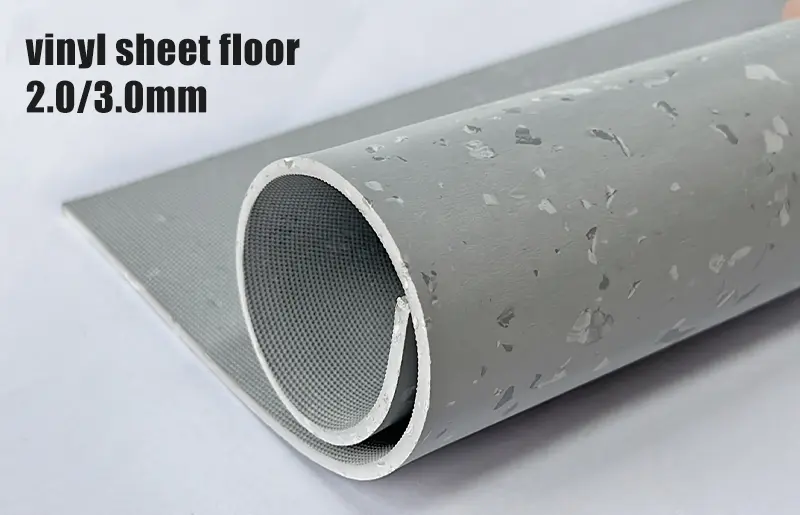
Homogeneous vinyl composite flooring is made from a single, uniform vinyl compound throughout its thickness, with color and pattern consistent across the entire material.
Advantages:
Extremely high abrasion resistance.
Suitable for high-traffic areas, with a lifespan of over 15 years.
No special maintenance required except for routine cleaning.
Extreme durability.
3.2 Heterogeneous Vinyl
Heterogeneous vinyl composite flooring features a multi-layered composite structure, including a backing layer, a pattern layer, and a wear layer.
Advantages:
A wide selection of patterns and colors; customizable designs and colors.
Comfortable underfoot feel; absorbs impact and reduces noise.
Mid-range price; durable.
Aesthetically pleasing and comfortable for various settings.
4. Key Requirements for Nursing Home Vinyl Flooring
4.1 Slip Resistance
Slip resistance should be verified through third-party testing. The most widely accepted standard is the DIN 51130 slope test, which rates the slip resistance of flooring from R9 (low slip resistance) to R13 (very high slip resistance).
Generally dry areas (residential rooms, hallways): minimum R10. Damp areas (bathrooms, kitchens): minimum R11-R12.
In addition, the wet sway test value (compliant with BS 7976 standard) should be checked. This value should be 36 or higher, indicating low slip resistance. It is important to confirm that the slip resistance is built into the wear layer itself, and not just the surface coating.
4.2 Fire Performance
Fire resistance ratings have strict requirements and cannot be ignored.
European Standard: EN 13501-1, Bfl-S1 grade (low flammability, low smoke production)
American Standard: ASTM E648, Class I
Chinese Standard: GB 8624 Class B1
4.3 Indoor Air Quality
Low-VOC flooring is crucial for maintaining healthy indoor air and avoiding irritation to the lungs, eyes, and skin.
FloorScore Certification
GREENGUARD Gold Certification (Low Emissions Certification, suitable for sensitive environments)
ISO 14001 Environmental Management System Certification
Avoid choosing cheap vinyl products that use inexpensive plasticizers and adhesives.
4.4 Chemical Resistance
Nursing homes use disinfectants, bleach solutions, and cleaning agents to control infections. These chemicals can cause low-quality flooring to fade, lose its shine, or become damaged.
Medical-grade vinyl flooring is formulated to resist common disinfectants, alcohol, and mild acids.
5. Where Can Vinyl Sheet Flooring Be Used in Elderly Care Facilities?
5.1 Rooms
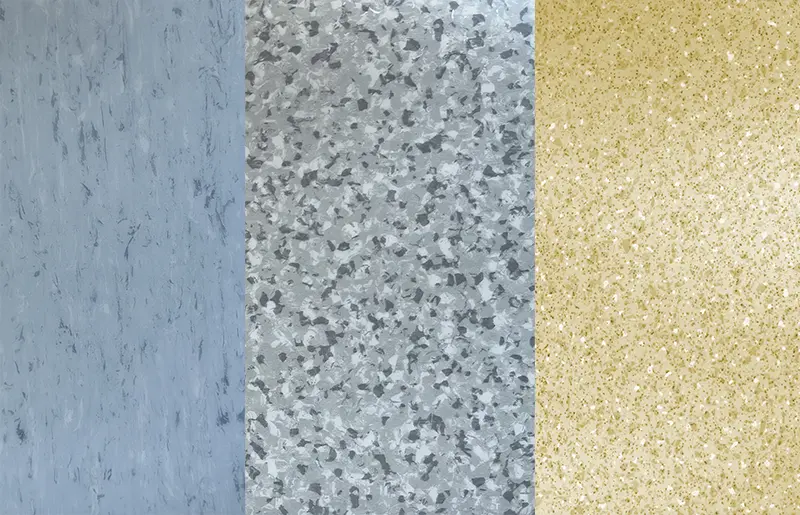
Room floors in treatment spaces should be warm, quiet, and comfortable. Heterogeneous vinyl rolls with a cushioning layer are ideal. They can mimic wood or stone grain, creating a warm, homey atmosphere rather than a cold, institutional feel.
5.2 Hallways
Hallways in medical areas are high-traffic areas—wheelchairs, walkers, staff, visitors, and supply carts all pass through. Durable and abrasion-resistant homogeneous vinyl rolls are the preferred choice for hallways.
5.3 Dining Rooms
Dining rooms often experience food and beverage spills, and there is a high volume of people and carts. Therefore, stain resistance and ease of cleaning are crucial. Homogeneous and high-strength heterogeneous vinyl are suitable for this area.
5.4 Bathrooms and Wet Areas
Bathrooms, shower rooms, and washrooms have the highest risk of falls. Safety vinyl flooring with high slip resistance (R11 or higher) must be used.
 Get our vinyl flooring catalog
6. How to Choose a Vinyl Sheet Flooring Supplier for Elderly Care Projects?
6.1 Certification and Testing
Reliable vinyl flooring suppliers will be happy to provide complete third-party test reports and certifications covering aspects such as slip resistance, fire resistance, low VOC emissions, and chemical resistance. Benchmark against manufacturers with ISO 9001 quality management system certification.
6.2 Project Experience
Suppliers specializing in medical and antistatic applications understand the unique needs of nursing home environments better than general commercial flooring companies. They can provide product selection advice based on different regions, helping you meet local building codes and avoid common mistakes.
6.3 Installation and After-Sales Service
Vinyl flooring performance largely depends on proper installation—especially the heat fusion welding of joints and subfloor preparation. After-sales warranty and maintenance provide ongoing support.
6.4 Export and Logistics Capabilities
Please choose a vinyl flooring manufacturer that typically involves international sourcing. They should be familiar with national standards (CE, ASTM, etc.), provide necessary customs documentation, and have extensive experience in ocean freight logistics to avoid shipping delays and damage.
Dongxing Plastic is actively expanding its dedicated production line for vinyl flooring, providing more reliable customization capabilities and bulk delivery solutions for high-quality medical, anti-static, and office commercial applications. Contact us for the best project solutions.