Standard outdoor pickleball flooring should maintain stable performance under extreme conditions such as high temperatures, heavy rain, strong UV radiation, sandstorms, humidity, and low temperatures. It should not exhibit problems such as cracking, fading, warping, slippery surfaces, or uneven ball bounce; otherwise, a newly built court will become a burden within just a few years.
Therefore, materials that can withstand various harsh climatic conditions are the primary consideration for creating an all-weather pickleball court. We will explain what true all-weather performance means, how different climates damage the court surface, which materials are durable, and what aspects should be considered when choosing flooring for your project.
1. What Is All Weather Pickleball Court Flooring?
True all-weather pickleball court flooring is a purpose-built surface system engineered to retain its structural integrity, play performance, and safety characteristics when exposed to the full range of outdoor environmental stressors.
Extreme Heat: Sustained surface temperatures above 50°C (122°F) without softening or warping.
Heavy Rain: Intense downpours and prolonged moisture exposure without water damage or mold growth.
UV Exposure: Year-round direct sunlight without fading, brittleness, or surface powdering.
Dust & Sand: Wind-borne abrasive particles without excessive surface wear or clogging.
High Humidity: Constant moisture in the air without delamination or microbial growth.
Cold Weather: Subzero temperatures without cracking or becoming dangerously slippery.
Freeze-Thaw Cycles: Repeated freezing and thawing of trapped moisture without structural damage.
Across all these conditions, a high-quality all-weather floor must consistently deliver four core performance outcomes:
Stable Ball Bounce: Maintains USAPA-standard rebound (30–34 inches from a 78-inch drop) with less than 5% deviation across temperature extremes.
Reliable Slip Resistance: Preserves safe traction in both wet and dry conditions.
Player Comfort: Provides consistent shock absorption to reduce joint stress.
Long Service Life: Delivers 5-10 years of usable life with minimal maintenance, even in harsh climates.
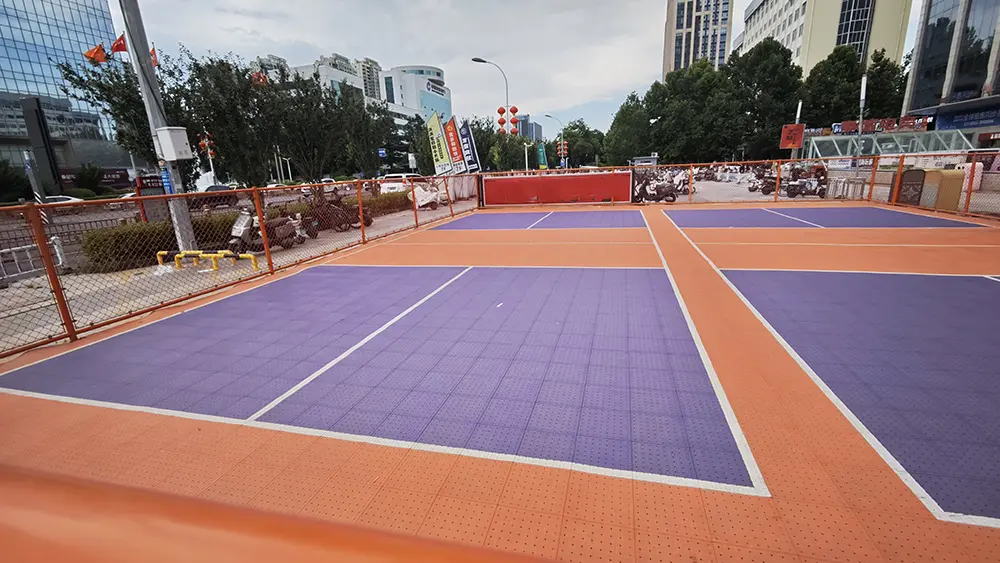
2. Why Weather Matters for Outdoor Pickleball Courts
High Temperatures
Summer surface temperatures on unshaded outdoor courts can reach 60–70°C (140–158°F), far hotter than ambient air temperature. For standard flooring materials, this causes four distinct problems:
Surface softening: Thermoplastic materials and acrylic binders soften at high temperatures, leaving permanent footprints, reducing traction, and altering ball bounce.
Color fading: UV and heat break down pigment molecules, turning vibrant courts dull and patchy within 2–3 years.
Thermal expansion: Materials expand as they heat up. Without proper stability, this leads to buckling, warping, and lifted edges that create tripping hazards.
Player discomfort: Overly heat-absorbent surfaces retain heat, increasing player fatigue and burn risk from falls.
A premium all-weather floor addresses these issues with UV-stabilized polymer formulations, high heat-deflection temperatures, and low thermal expansion coefficients to minimize dimensional change.
Heavy Rain
Frequent or intense rainfall is one of the most common causes of premature court failure. Standing water and prolonged moisture create cascading damage:
Water accumulation: Flat, non-porous surfaces hold water, making courts unplayable for hours or days after storms.
Slippery surfaces: Wet smooth surfaces lose traction, leading to slips, falls, and injuries.
Mold and mildew growth: Trapped moisture feeds microbial growth, which discolors the surface and further reduces traction.
Structural damage: Water seeps under glued-down surfaces, causing delamination, adhesive failure, and subbase erosion.
Dust and Sand
In drier regions like the Middle East, Australia, and the western United States, wind-blown dust and sand
over time can damage the anti-slip texture and make the surface smooth. Porous materials trap sand and dust, accelerating internal wear.
High-performance all-weather pickleball flooring features a non-porous surface that can be quickly swept or rinsed with water, and a highly abrasion-resistant surface that resists wear even with continuous contact with sand.
Cold Weather
Rain and snow seep into the tiny pores and cracks in the surface. When temperatures drop below freezing, water expands by about 9%, creating enormous internal pressure. Repeated freeze-thaw cycles can cause surface cracking, peeling, structural deformation, and seam cracking.
Modular all-weather flooring completely avoids these problems through interlocking installation, built-in expansion joints, and a flexible polymer material that moves with freeze-thaw cycles without cracking or breaking.
3. Best Materials for All Weather Pickleball Court Flooring
Not all outdoor court materials are created equal when it comes to weather resistance.
| Flooring Type | Heat | Rain | UV | Drainage | Maintenance |
|---|---|---|---|---|---|
| Acrylic Court | Good | Moderate | Good | Low | Medium |
| Concrete | Fair | Fair | Excellent | Poor | High |
| Rubber | Good | Good | Moderate | Moderate | Medium |
| Modular PP Tiles | Excellent | Excellent | Excellent | Excellent | Low |
3.1 Acrylic Pickleball Mat
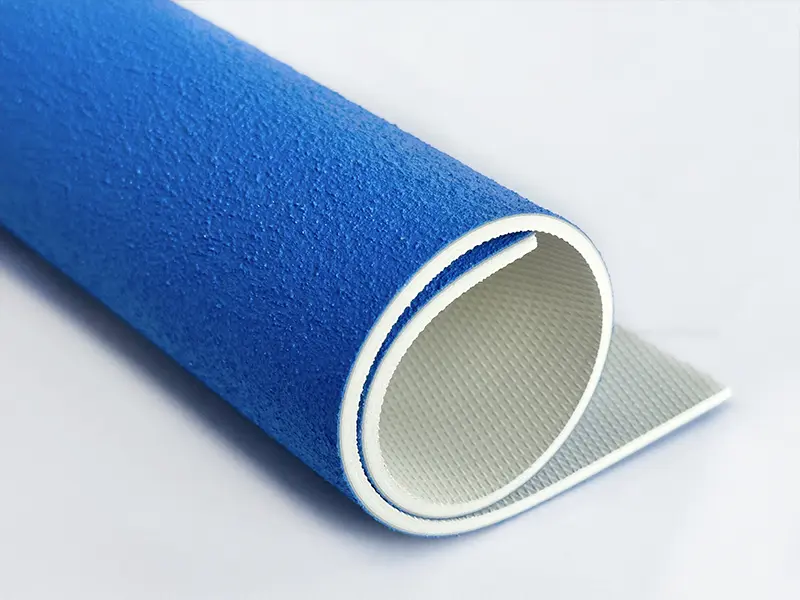
Dongxing Plastics’ acrylic outdoor pickleball material replaces the original pure paint, using a PVC + acrylic coating.
Advantages: Stable ball bounce, rich color options, highly wear-resistant, and weather-resistant. It’s the best choice for outdoor courts, balancing ball bounce and adaptability to various climates.
3.2 Cast-in-place Concrete
Exposed concrete with painted lines is the lowest initial cost option for outdoor courts.
However, the surface is hard, posing a high risk of injury, poor drainage, prone to freeze-thaw cracking, slippery when wet, and requiring frequent sealing and re-marking.
3.3 Rubber Flooring (EPDM Tiles)
Rubber flooring is favored for its shock absorption and soft feel.
It has good shock absorption, suitable for recreational sports, and decent grip in wet conditions.
However, it has poor UV resistance, hardens and the particles may detach after 3-5 years; it may emit an odor at high temperatures; its porous structure easily accumulates dirt and mold; and it is susceptible to oil and chemical corrosion.
3.4 Modular Polypropylene (PP) Floor Tiles
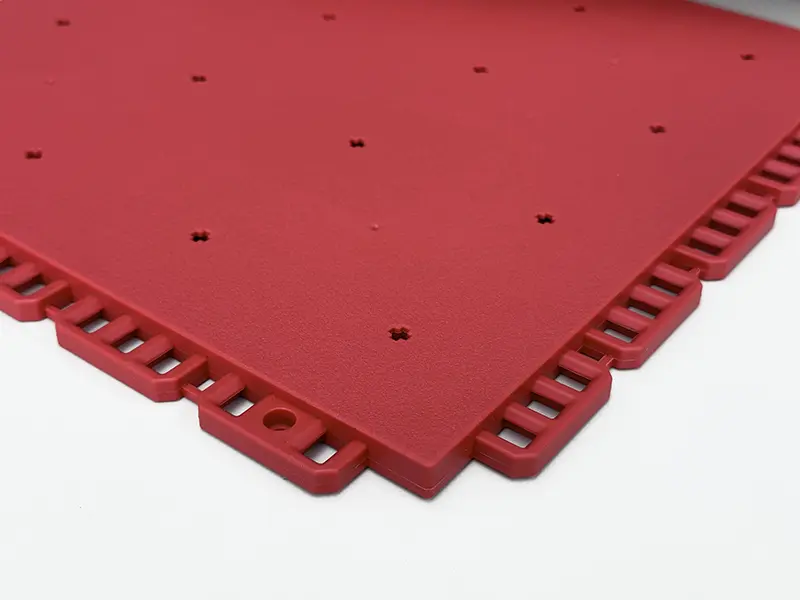
Injection-molded modular pickleball court tiles are currently the best-performing all-weather pickleball flooring solution on the market. They contain special UV and heat stabilizers, designed specifically for extreme outdoor environments.
If you need to cope with harsher climates, such as Indonesia and South America, which are tropical rainforest regions near the equator, it is almost a perfect option. It can be said to be a truly all-weather pickleball flooring material.
Key Advantages:
Superior UV resistance, 5+ year fade-resistant warranty
100% waterproof, open mesh drainage design for rapid drainage
Wide operating temperature range (-40°C to 70°C)
Floating snap-on installation, withstands freeze-thaw cycles and substrate movement
Built-in shock absorption reduces pressure on knees and ankles
Portable and reusable; damaged tiles can be replaced individually
Extremely low maintenance costs, no need for sealing, painting, or renovation
Lifespan of 5-10+ years in most climates
Suitable for all climate zones, high-traffic public facilities, parks, schools, clubs, and any project prioritizing long-term cost-effectiveness and maximum durability.
Why Dongxing Plastic?
In recent years, we have upgraded the technology and processes of our entire pickleball flooring product line. For example, we’ve been discussing acrylic pickleball mats, and many pickleball enthusiasts are familiar with the issue of poor pickleball rebound in interlocking tiles. Our latest Modular Interlocking Pickleball Court Tiles (DX30/XF) have solved this problem, guaranteeing standard ball rebound.
Feel free to request free samples and quotes from us to find the best solution for your venue!