
Introduction
Properly rolling and storing PVC sports flooring is essential to preserve its surface finish, structural integrity, and long-term performance. A professional MPP pipe floor roller is a purpose-built tool that streamlines flooring handling, reduces physical labor, and minimizes the risk of creases and damage during storage or relocation. This comprehensive user guide covers full product specifications, step-by-step operating instructions, and critical safety and maintenance precautions for this green floor roller, helping facility managers, flooring installers, and sports venue operators use the tool correctly and efficiently.
Product Specifications of the MPP Floor Roller
This floor roller is engineered with durable MPP (Modified Polypropylene) pipe, featuring a modular two-piece design that balances structural strength with portability. Below are its complete technical parameters:
| Specification | Details |
|---|---|
| Core Material | MPP Pipe |
| Unit Length | 3.6 m per piece, 2 pieces total |
| Total Weight | 30 kg |
| Inner Diameter | 14 cm |
| Outer Diameter | 16 cm |
| Pipe Wall Thickness | 8 mm |
| Finish Color | Green / Orange |
The 8mm thick pipe wall delivers high bending resistance, allowing the roller to support the full weight of wide PVC sports flooring without warping. When assembled, the 7.2m total length accommodates most standard full-width sports flooring rolls, while the split design simplifies transport and off-site storage.
Step-by-Step Operating Instructions for Rolling Sports Flooring
Follow these 5 sequential steps to achieve smooth, even, damage-free rolling of your PVC sports flooring:
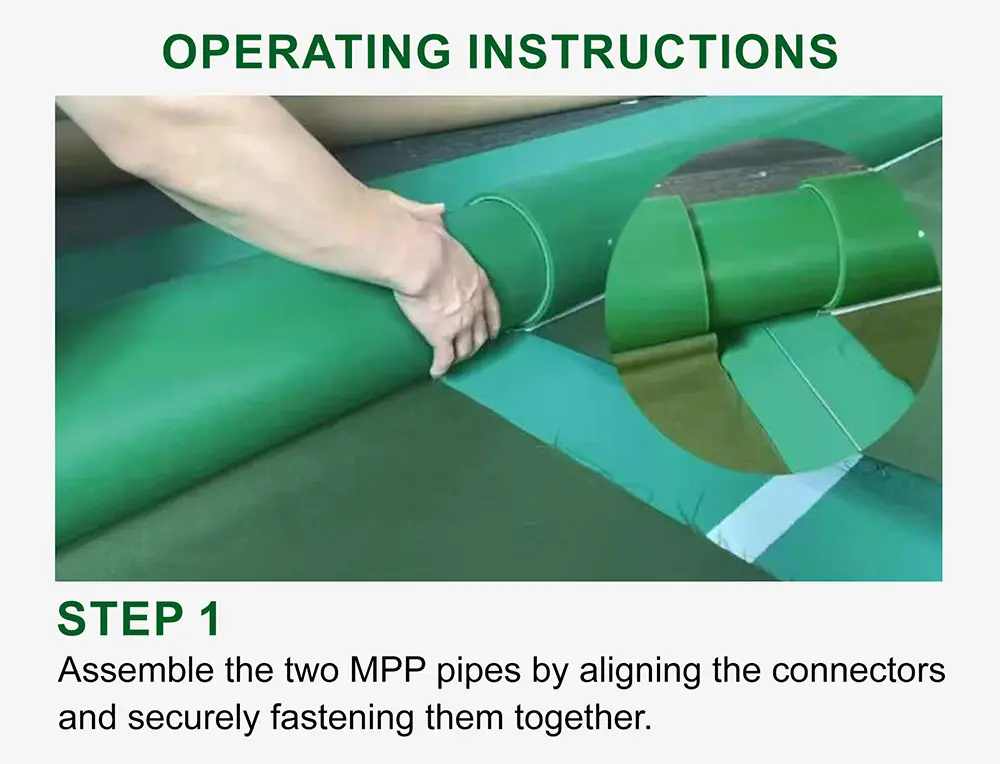
Step 1: Assemble the MPP Pipe Sections
Begin by aligning the connecting joints on the two 3.6m MPP pipe segments. Fasten the connectors securely to form a single, rigid full-length roller tube. A tight, stable connection eliminates misalignment and ensures consistent rolling performance.
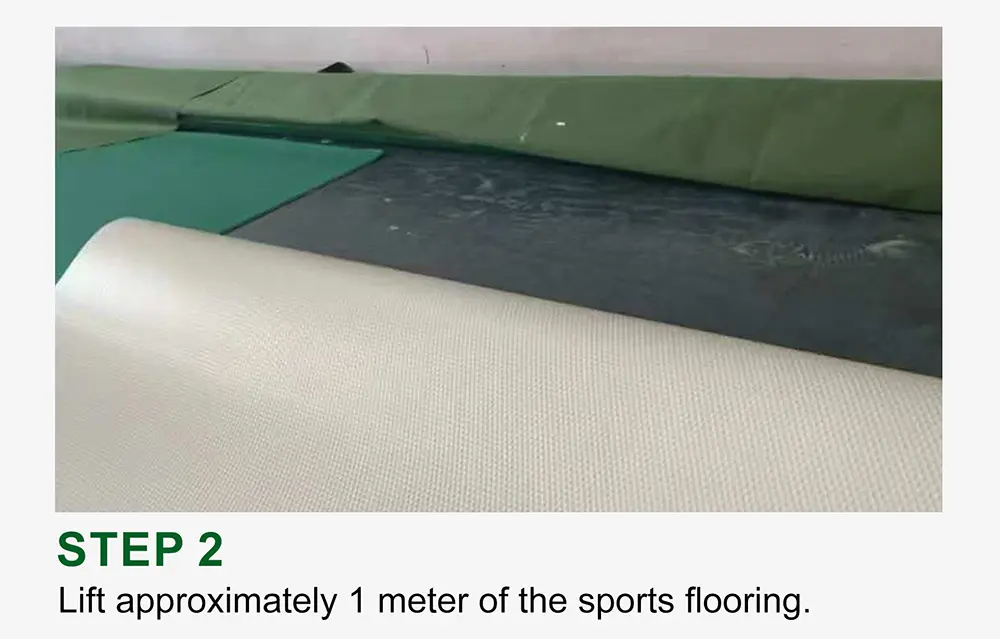
Step 2: Lift the Starting Edge of the Flooring
Lift approximately 1 meter of the sports flooring from one end. This creates a manageable starting flap that can be easily fed onto the roller, establishing a clean starting point for the roll.
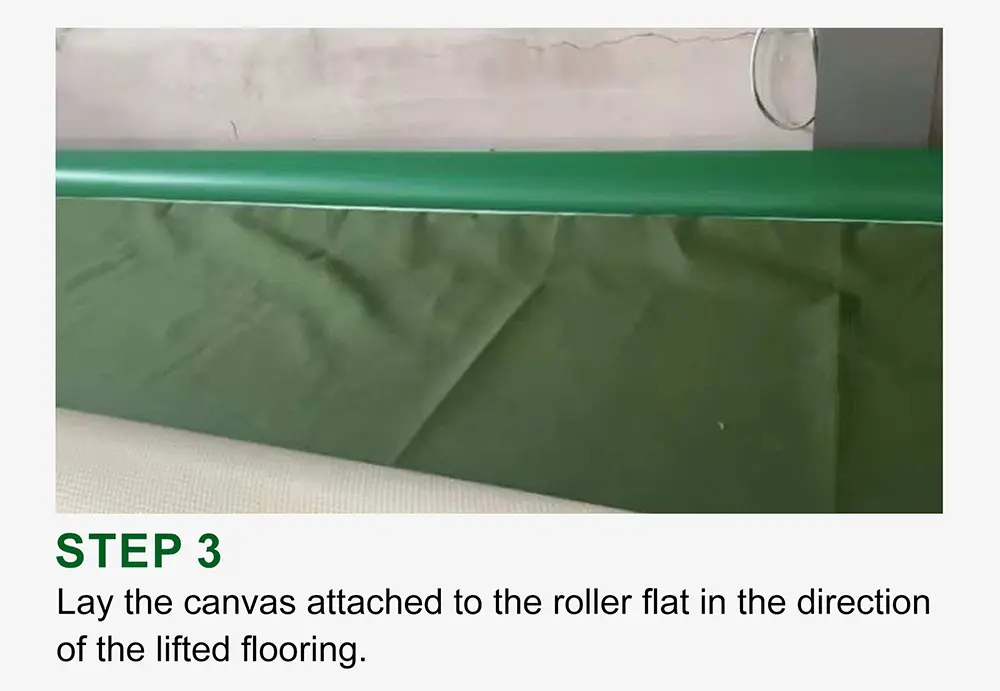
Step 3: Position the Attached Canvas
Lay the canvas integrated with the roller flat on the ground, aligned with the direction of the lifted flooring edge. The canvas provides uniform traction and protects the flooring’s decorative surface from scuffs and abrasion during the rolling process.
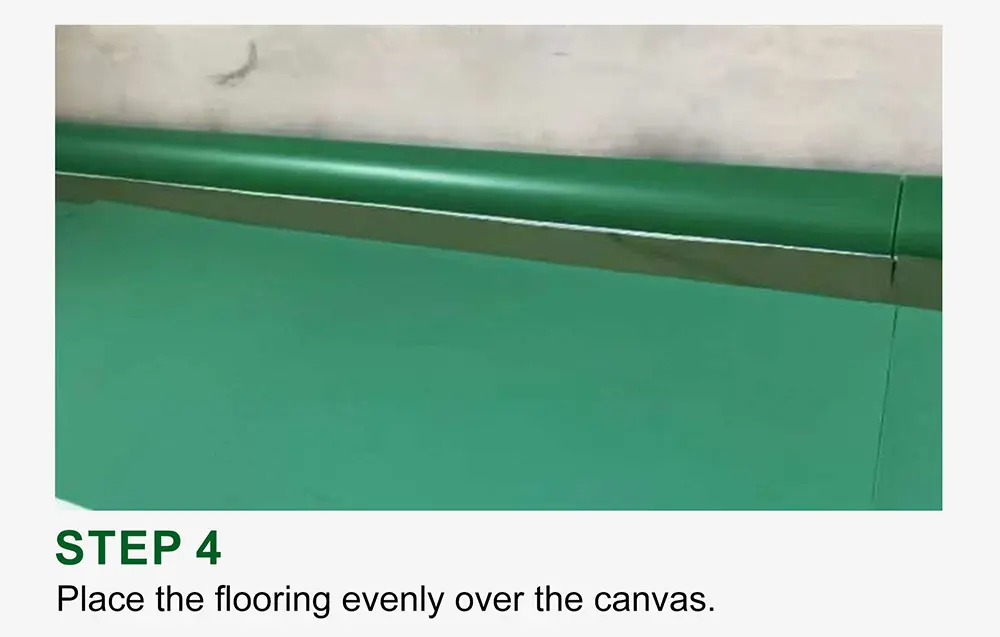
Step 4: Align the Flooring Over the Canvas
Place the lifted section of sports flooring evenly across the canvas on the roller. Take time to center the flooring and confirm it is straight and square to the roller — this prevents lopsided winding, edge fraying, and permanent creases.
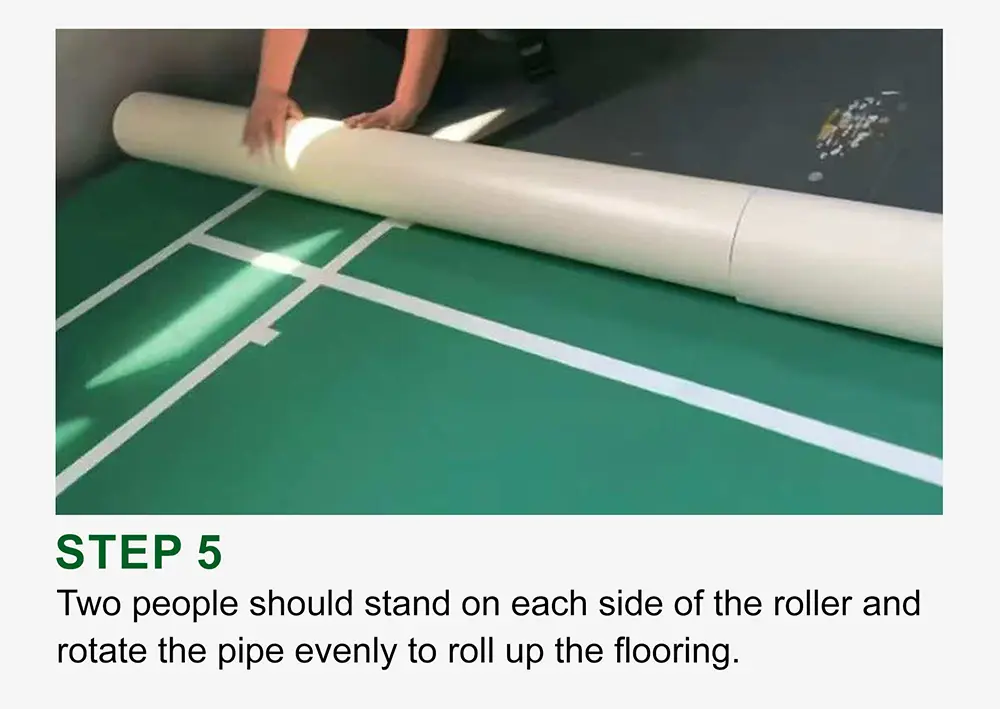
Step 5: Roll the Flooring With Synchronized Two-Person Operation
For optimal safety and roll quality, position one operator on each end of the roller. Both workers should rotate the pipe at a matching, steady speed to wind the flooring evenly onto the tube. Synchronized movement produces a tight, uniform roll that is easy to transport and store.
Precautions for use
To extend the lifespan of both your floor roller and Vinyl sports flooring, and to ensure safe handling, follow these important guidelines:
Maintain a consistent rolling speed
Keep the roller moving at a uniform pace throughout the entire winding process. Steady, even movement ensures tight, level layering and prevents wrinkles, loose sections, and uneven roll diameter.
Avoid uneven force on the roller ends
Applying unequal pressure or speed from side to side can cause the roller to tilt, strain the pipe connectors, and create misaligned rolls that damage flooring edges. Both operators must match their force and rotation speed.
Store rolled flooring in a dry, protected environment
After rolling is complete, store the flooring roll in a dry, covered area. Shield it from moisture, rain, and high humidity to prevent mold growth, PVC material degradation, and adhesive failure.
Keep the roller away from heat sources
MPP material is susceptible to deformation under sustained high temperatures. Store the roller away from direct sunlight, space heaters, furnaces, and other heat sources to preserve its cylindrical shape and structural rigidity.
Do not place heavy objects on rolled flooring
Never stack heavy items on top of finished flooring rolls. Continuous external pressure will cause permanent indentations, creases, and surface deformation, ruining the flatness and functional performance of the sports flooring.