
Introduction
When specifying flooring for healthcare facilities, thickness is one of the first metrics facility managers, architects, and procurement teams evaluate. If you’re wondering how thick hospital vinyl flooring is, here’s the quick answer:
Standard hospital vinyl flooring ranges from 2mm to 3mm in total thickness, with specialized products extending to 4mm. Breakdown by product type:
- Homogeneous vinyl: approximately 2mm
- Heterogeneous vinyl: 2–3mm
- Safety vinyl (enhanced slip resistance): 2.5–3mm
- Cushioned vinyl: 3–4mm
However, thickness alone does not determine durability, performance, or lifespan. The wear layer, floor construction, and intended application are equally important—and often more influential—than total depth alone.
This guide breaks down standard thickness specifications, debunks common “thicker = better” myths, and explains how to select the right vinyl flooring thickness for every area of a healthcare facility.
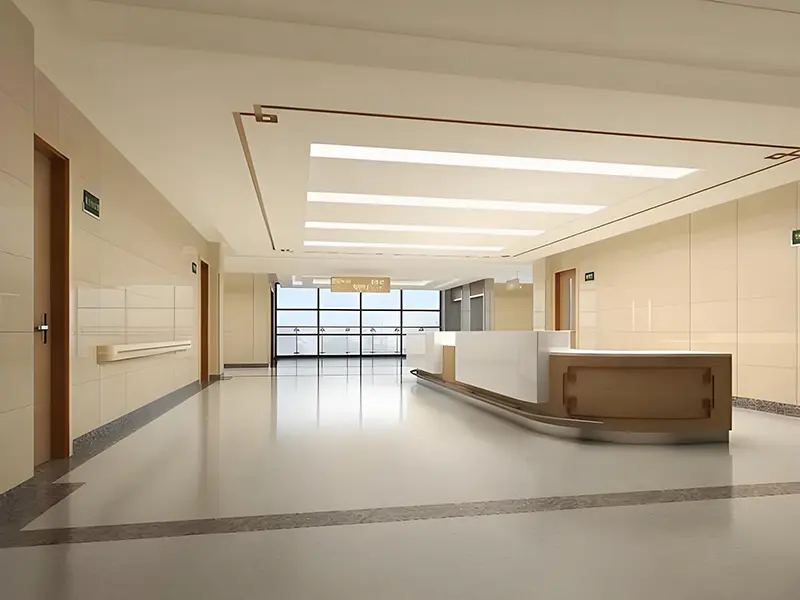
1. What Is the Standard Thickness of Hospital Vinyl Flooring?
Healthcare-grade vinyl is engineered to meet strict hygiene, safety, and durability standards, with thickness calibrated to the product’s core construction. The two most widely used types in hospitals have well-established industry thickness norms:
- Homogeneous Vinyl: 2.0 mm
- Heterogeneous Vinyl: 2–3 mm
Homogeneous Vinyl
Homogeneous vinyl is a single-layer, through-body product made from a uniform vinyl compound. For hospital applications, it is almost universally manufactured to a 2.0mm thickness. Its consistent composition means every layer of the material has the same performance properties, from top surface to backing.
Heterogeneous Vinyl
Heterogeneous vinyl features a multi-layer build: a supportive backing, printed design layer, and transparent protective wear layer on top. Hospital-grade heterogeneous products typically range from 2mm to 3mm total thickness, with variation based on backing material, cushioning, and wear layer depth.
Specialized hospital vinyl products fall into slightly wider thickness ranges:
Safety vinyl (high slip resistance for wet or high-risk areas): 2.5–3mm
Cushioned vinyl (comfort-focused for patient rooms and long-term care): 3–4mm
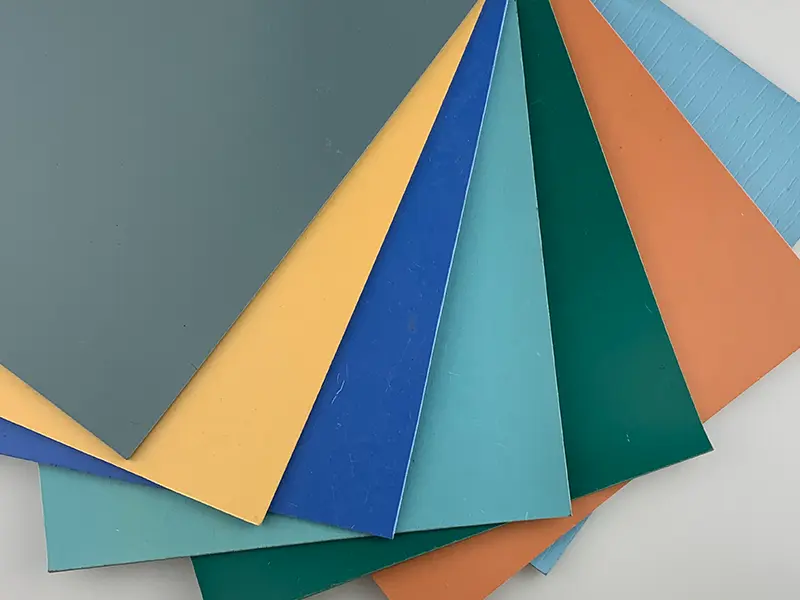
2. Does Thicker Vinyl Flooring Mean Better Performance?
A common misconception in healthcare flooring procurement is that greater thickness automatically equals better quality and longer life. In reality, thickness only improves specific performance attributes, and has no impact on others.
What Thicker Vinyl Actually Improves
Underfoot comfort:
Additional material provides mild cushioning, reducing foot fatigue for nursing and clinical staff who stand or walk for full shifts.
Sound reduction:
Thicker flooring absorbs more impact noise from footsteps and rolling equipment, supporting quiet healing environments for patients.
Subfloor imperfection concealment: Thicker vinyl can mask minor subfloor unevenness, hairline cracks, or surface flaws, reducing subfloor preparation work during renovations.
What Thickness Does Not Improve
Scratch and abrasion resistance:
Wear performance depends on the top-layer formulation and surface treatment, not total floor depth.
Chemical resistance:
Resistance to disinfectants, bodily fluids, and medical chemicals is determined by the surface material, not overall thickness.
Total service lifespan:
A thin, high-density homogeneous floor can easily outlast a thicker, low-quality heterogeneous product.
Key takeaway:
When it comes to long-term durability, the wear layer matters far more than total thickness.
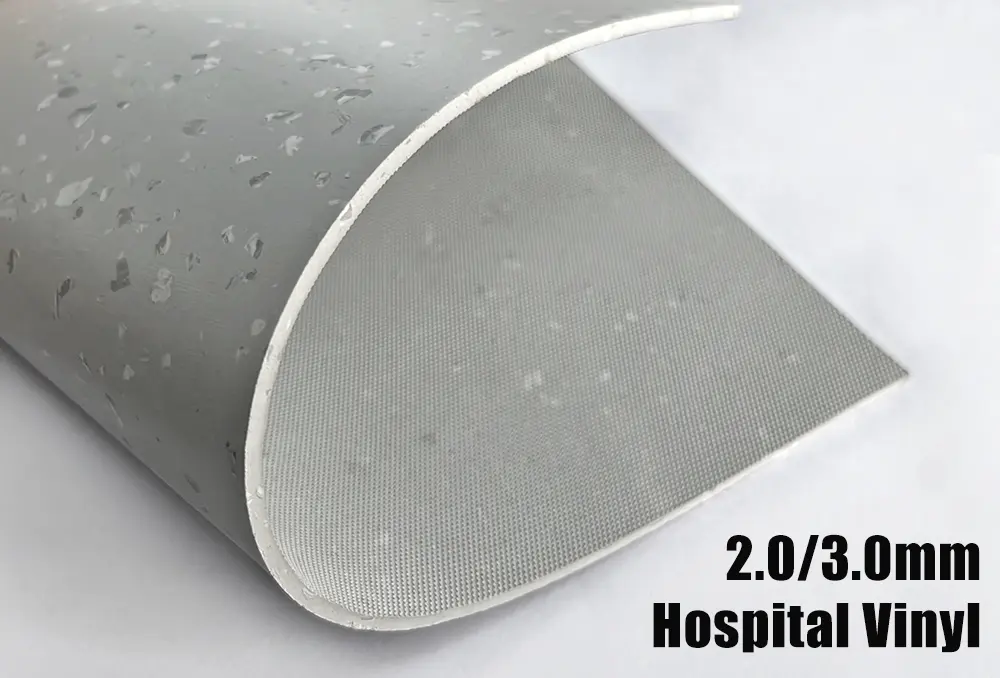
3. Hospital Grade Vinyl Flooring Thickness vs. Wear Layer
Overall thickness measures the full depth of the floor from top surface to bottom backing.
Wear layer refers to the clear, protective top layer of heterogeneous vinyl that resists scuffs, stains, and abrasion. Homogeneous vinyl has no separate wear layer—the entire product acts as wear material due to its uniform through-body construction.
Typical hospital vinyl thickness and wear layer pairings include:
- 2.0mm homogeneous vinyl: Full-body wear (no separate wear layer)
- 2.5mm heterogeneous vinyl: ~0.7mm wear layer
- 3.0mm heterogeneous vinyl: ~0.8mm wear layer
Why 2mm Homogeneous Vinyl May Outlast 3mm Heterogeneous Vinyl?
Because hospital homogeneous vinyl uses through-body construction, it wears down evenly over time. Even after years of heavy traffic, the surface remains the same material with the same hygiene and performance properties. Minor scuffs and scratches can be buffed and repaired, extending service life by decades.
By contrast, a 3mm heterogeneous floor only has a thin protective wear layer on top. Once that layer wears through, the printed design and softer backing layers are exposed, and the floor loses its stain resistance, cleanability, and structural integrity. For high-traffic hospital zones, 2mm homogeneous vinyl almost always delivers a longer service life than thicker heterogeneous alternatives.
4. How to Choose the Right Thickness for Different Traffic Levels
The ideal vinyl thickness for a hospital space depends primarily on its foot and rolling traffic volume. Below is a specification guide by traffic category:
Light Traffic
Common spaces: Private clinics, consultation rooms, physician offices, low-traffic administrative areas
Recommended thickness: 2mm
Low-traffic zones see consistent but minimal foot traffic and very little rolling equipment. 2mm homogeneous or entry-level heterogeneous vinyl delivers full performance for these areas at the lowest upfront cost.

Medium Traffic
Common spaces: Patient wards, general treatment rooms, nursing areas, back-of-house offices
Recommended thickness: 2–2.5mm
Medium-traffic areas see regular foot traffic and occasional rolling equipment such as wheelchairs and supply carts. A 2–2.5mm thickness balances durability, underfoot comfort, and cost efficiency.
Heavy Traffic
Common spaces: Emergency departments, main corridors, nurse stations, lobby areas, diagnostic imaging waiting zones
Recommended thickness: 2.5–3mm
High-traffic zones endure 24/7 foot traffic, frequent heavy rolling loads, and constant use. A 2.5–3mm thickness provides improved dimensional stability and impact resistance, paired with either dense homogeneous construction or a thick wear layer for long-term performance.
5. Thickness and Rolling Load Performance
Hospitals present unique flooring stressors due to constant heavy rolling equipment: hospital beds, wheelchairs, stretchers, medication carts, and mobile diagnostic equipment move across floors around the clock. Thickness directly impacts how well vinyl flooring holds up to this repeated rolling load.
Risks of flooring that is too thin
Permanent indentation from stationary heavy equipment
Visible wheel marks and track lines from repeated cart and bed movement
Dimensional instability, such as curling, shifting, or seam separation
Benefits of properly thick hospital vinyl
A sufficiently thick, high-density hospital vinyl floor delivers
Better dimensional stability under repeated rolling stress
Faster indentation recovery
Consistent surface uniformity over years of heavy equipment use
For areas with extremely heavy rolling loads, such as surgical suite corridors and central supply pathways, 2.5–3mm high-density homogeneous vinyl is the standard specification.
6. Is 2mm Vinyl Flooring Thick Enough for Hospitals?
Yes. For the vast majority of hospital applications, 2mm homogeneous vinyl flooring is the global industry standard—and for good reason.
Extremely dense composition: Healthcare-grade 2mm homogeneous vinyl is formulated with high filler content and a dense structure that resists indentation and abrasion far better than thicker, lower-density products.
Through-body construction: Surface scuffs and scratches can be buffed and repaired without replacing the floor, dramatically extending service life.
Proven longevity: With proper maintenance, 2mm homogeneous hospital vinyl can last 15–20+ years even in medium-to-heavy traffic areas.
Cost-effective performance: It delivers commercial-grade healthcare durability at a lower total cost of ownership than thicker specialty products.
2mm vinyl is not “too thin” for hospitals—it is the baseline trusted by healthcare facilities worldwide.
7. When Should You Choose 3mm Hospital Vinyl Flooring?
While 2mm is standard for most areas, 3mm vinyl is the better choice for specific use cases where extra thickness delivers measurable operational benefits:
Noise reduction priorities: In patient rooms, mental health wards, and sleep centers, 3mm flooring absorbs more impact sound, creating a quieter healing environment that supports patient recovery.
Enhanced walking comfort: For areas where staff stand for extended periods (such as lab workstations and pharmacy counters), 3mm thickness reduces leg and foot fatigue.
Extremely heavy rolling traffic: In loading docks, central supply corridors, and emergency department main thoroughfares, 3mm high-density vinyl offers extra dimensional stability against constant heavy cart and bed traffic.
Renovations over uneven subfloors: When subfloor conditions are imperfect and full remediation is not feasible, 3mm vinyl can conceal minor subfloor flaws, reducing installation prep time and cost.
8. Other Factors More Important Than Thickness
Thickness is only one piece of the hospital flooring specification puzzle. When evaluating vinyl products, these factors often have a greater impact on safety, compliance, and long-term performance:
Wear layer quality and thickness:
For heterogeneous vinyl, a robust, high-performance wear layer is the single biggest driver of abrasion resistance and service life.
Slip resistance:
Healthcare facilities require slip-resistant surfaces (typically R9–R10 rating) to reduce fall risks for patients, staff, and visitors.
Infection control properties:
Non-porous, easy-to-clean surfaces with antimicrobial compatibility support hospital hygiene protocols and reduce pathogen transmission.
Seam weld capability:
Heat-welded seams create a seamless, waterproof surface that prevents fluid and bacteria from seeping under the floor.
Maintenance compatibility:
Flooring that withstands standard hospital disinfectants without deteriorating lowers long-term ownership costs.
Fire rating:
Hospital flooring must meet strict fire safety standards for life safety compliance.
Low VOC emissions: Low-VOC, indoor air quality-certified flooring supports safe air quality for immunocompromised patients and staff.